Lawn Pest Control Services Cape Coral FL That Save Time and Money
Anyone who has cared for a lawn in Cape Coral for more than a season knows the grass is only half the battle. Heat, humidity, frequent rain, sandy soil, and a long growing season create ideal conditions for turf, but they also create ideal conditions for insects that feed fast and spread faster. A yard can look healthy on Monday and show thinning, browning, or ragged patches by the weekend. That speed is exactly why smart homeowners start looking at Lawn Pest Control Services Cape Coral FL before damage becomes expensive.
The real value of professional lawn pest work is not just that it kills bugs. It protects time, prevents misdiagnosis, and reduces the cycle of treating the same issue over and over. Many lawn problems look alike from a driveway. Chinch bugs, sod webworms, mole crickets, drought stress, fungal issues, poor irrigation coverage, and nutrient imbalance can all leave turf discolored or thin. If the wrong problem gets treated, money disappears quickly and the lawn keeps declining.
In Cape Coral, where St. Augustine grass is common and outdoor conditions favor year-round pest pressure, a good lawn pest program is less about one dramatic treatment and more about disciplined timing, accurate identification, and follow-up. That is where professional experience tends to pay for itself.
Why lawn pests get expensive so quickly in Cape Coral
Cape Coral lawns do not get much downtime. Grass grows for most of the year, weeds stay active, insects remain present through long warm stretches, and irrigation systems run often enough to influence nearly every turf issue. In cooler climates, some pest problems slow down hard in winter. Southwest Florida does not offer that kind of break.
That matters because insect feeding damage often compounds in layers. A chinch bug population, for example, may begin in a sunny https://www.google.com/maps?cid=15433523811512679622 stretch near pavement or a driveway where turf is already stressed. The grass starts yellowing, then browning. A homeowner assumes the sprinkler zone is failing and increases watering. The extra irrigation does not solve the insect pressure, and sometimes it worsens overall lawn health by encouraging shallow rooting or disease conditions. A few weeks later, the damaged area is larger, sod replacement is being discussed, and the original issue would have cost far less to correct earlier.
Mole crickets create a different kind of expense. They tunnel below the surface, disrupt roots, and leave grass feeling spongy underfoot. Homeowners often notice irregular decline without seeing the insect itself. By the time someone recognizes the pattern, there may be root loss significant enough to require more than a simple insecticide application. Recovery may need irrigation adjustment, nutrition correction, and in bad spots, reestablishment of turf.
Sod webworms are another common source of frustration. Their larvae feed on blades of grass and can create areas that look scalped or ragged. Since the adult moths are small and easy to ignore, the problem often goes untreated until visible damage is obvious. Again, delay is what costs money.
The hidden cost of do-it-yourself trial and error
There is nothing wrong with handling some lawn tasks yourself. Many homeowners do a solid job with mowing, watering schedules, and seasonal feeding. Pest control is different because the symptoms overlap and the timing matters. Most wasted lawn care money does not come from buying one product that failed. It comes from buying three or four products for the wrong problem.
A common pattern looks like this. First, a homeowner notices brown patches and applies fertilizer. When that does not work, they try a hose-end insect product from a big box store. A week later, they assume the lawn is dry and run irrigation longer. Then they add a fungicide because someone online said the spots resemble disease. At that point, they may have spent a few hundred dollars, several weekends, and a lot of frustration, only to end up calling for professional help anyway.
Professionals save time because they narrow the possibilities quickly. An experienced technician does not just look at color. They check where the damage starts, how the blades look, whether roots are compromised, whether insect activity is visible near the thatch or soil line, and how the affected area relates to sun exposure, pavement heat, and irrigation patterns. That kind of field judgment is difficult to replicate with packaging instructions and internet photos.
There is also the issue of application quality. Granular products need correct spread rates and proper watering in. Liquid treatments need accurate mixing, coverage, and timing. Some products work best on active larvae at certain stages. Missing the treatment window can mean spending money for modest results.
What professional Lawn Pest Control Services actually do
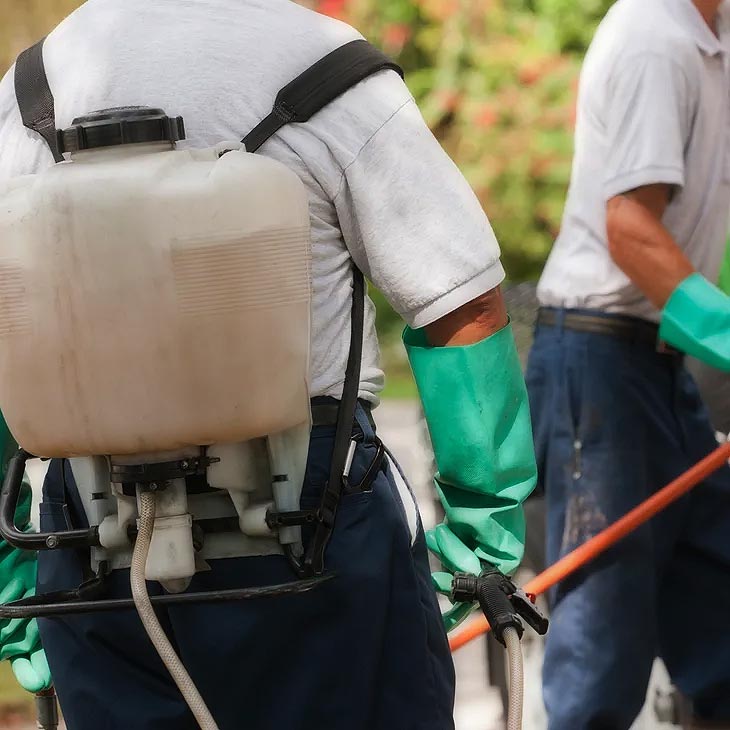
Many people hear the phrase Lawn Pest Control Services and picture a technician spraying the yard once a month. Strong service is more deliberate than that. It begins with diagnosis, then builds around the pest pressure, the turf type, and the property conditions.
A well-run lawn pest service usually includes site inspection, identification of likely insect activity, treatment matched to the problem, and recommendations that support recovery. Recovery is important because dead or weakened grass does not bounce back just because the insects are gone. Turf often needs a coordinated plan that may involve mowing changes, irrigation corrections, or broader lawn care support.
The best providers in Cape Coral also pay attention to pest hotspots on the property. Grass near driveways, sidewalks, seawalls, reflective surfaces, and south-facing open areas often behaves differently than shaded interior sections of the lawn. Heat stress can intensify insect damage and make a manageable issue look much worse. A technician who understands those patterns can spot trouble earlier.
Here is where professional service usually saves the most money: it prevents over-treatment. Not every discolored area requires a blanket application over the entire property, and not every pest issue needs the same product. Spot treatment, targeted treatment, or a seasonally adjusted plan can be more effective and more economical than routine blanket spraying without diagnosis.
The pests Cape Coral homeowners run into most often
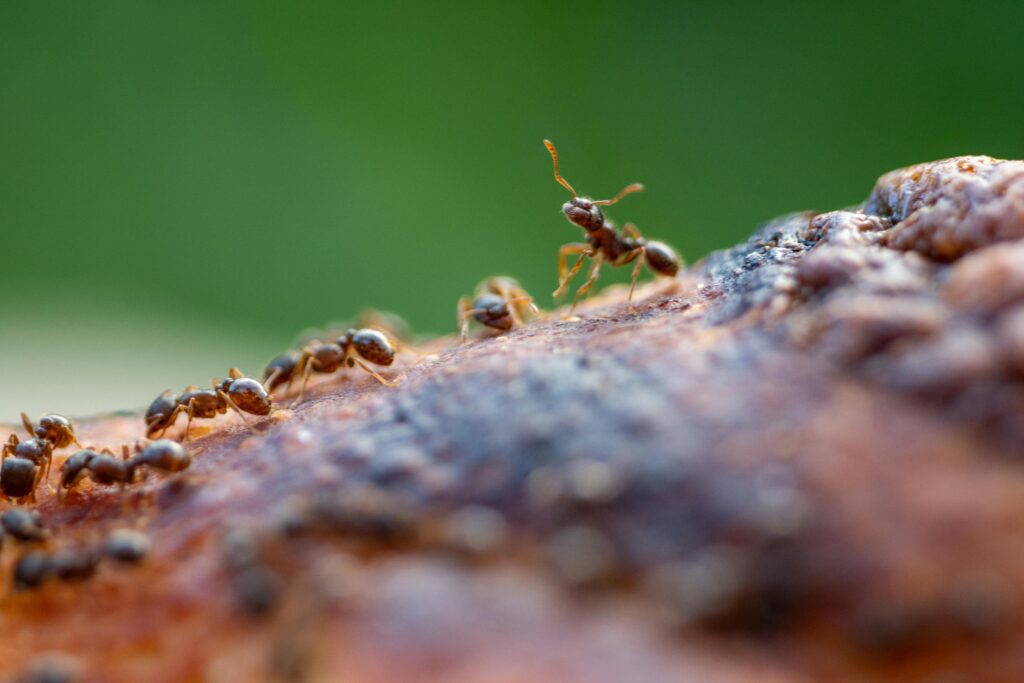
In this region, a few turf pests show up repeatedly, and each one leaves a different signature when you know what to look for. Chinch bugs are notorious in St. Augustine lawns. They thrive in hot, sunny conditions and often start causing visible decline in sections of turf that already carry environmental stress. Homeowners may notice yellowing that progresses to irregular brown patches, especially near hardscape that reflects heat.
Mole crickets attack from below. Instead of chewing blades in a way that is easy to spot, they disturb roots and tunnel through the soil. Lawns can feel soft, uneven, or loose underfoot. Grass may peel back more easily than healthy turf because the root system is not anchoring properly.
Armyworms and sod webworms feed more directly on blades. The lawn can appear chewed down, with areas that look thinned almost overnight. Moths hovering low over the turf around dusk can be a clue, but not everyone notices them.
Grubs get attention in many parts of the country, though in Southwest Florida the broader conversation tends to focus more often on chinch bugs, mole crickets, and caterpillar-type feeders. Still, when root feeding is involved, grass can lose vigor quickly and become easy to pull up.
The point is not to memorize every pest. The point is that each one requires different judgment. That is where specialized Lawn Pest Control Services Cape Coral FL can outperform generic lawn applications.
Time savings that matter more than most people expect
Homeowners often focus on the treatment price and overlook the labor wrapped around the problem. Pest issues consume time in ways that do not show up on an invoice. There is the time spent comparing products, reading labels, searching photos online, driving to stores, setting up spreaders or sprayers, applying treatments, then waiting and wondering if the approach was right.
Then comes the recovery work. Damaged turf usually needs more attention, not less. Brown or thinned areas invite weeds. Weak grass may require plugging, patching, or careful feeding. Irrigation may need to be adjusted because the lawn is now less uniform than before. If the issue drags on for a month or two, the time burden multiplies.
A professional service compresses that timeline. They identify, treat, and revisit on a schedule that reflects the season and the biology of the pest. That kind of continuity is hard to duplicate if you are fitting lawn care around work, family, and weather.
One of the more practical benefits is recordkeeping. Good lawn service providers track what was seen, what was applied, and how the lawn responded. That history matters. If the same section of turf has repeated problems every warm season, patterns emerge. Maybe the area is under-watered because of poor head coverage. Maybe reflected heat is creating chronic stress. Maybe the grass variety in that section is especially vulnerable. Without records, every season starts from zero.
When professional service is usually cheaper than replacement
A lawn rarely goes from healthy to total failure in a single day. Most expensive repairs happen because a moderate problem was allowed to become severe. Once the root system is badly compromised or large sections of turf are dead, control becomes only part of the cost. The rest is restoration.
Sod replacement in Florida is not cheap when you factor in removal, prep, new material, installation, and aftercare. Even on a modest area, the bill can climb fast. If the underlying insect issue was never handled correctly, new sod can struggle too. That is why preventive or early intervention service often ends up being the budget choice, even if it does not feel that way at first.
I have seen homeowners spend what looked like a reasonable amount trying to save money themselves, only to face a much larger bill for re-sodding a front yard section that a timely diagnosis might have preserved. The frustrating part is that the replacement cost is visible and immediate, while the cost of delay builds quietly.
What to look for in a Cape Coral provider
Not all companies approach turf pests with the same level of precision. Some are excellent at broad lawn maintenance but weaker on insect diagnosis. Others understand pest pressure well but do not connect it to irrigation, mowing, or turf recovery. The best choice is a provider that sees the whole system.
A strong company should be able to explain what they believe is happening, why they believe it, and how treatment timing fits the insect involved. They should not rely on vague statements like “the lawn just looks stressed.” Stress is a condition, not a diagnosis.
A few signs usually separate a thoughtful provider from a generic one:
- They inspect affected areas closely instead of recommending treatment from curbside impressions.
- They explain whether the problem is active feeding, old damage, or a mix of both.
- They connect pest control with watering, mowing height, and turf type.
- They discuss follow-up, not just the first visit.
- They set realistic expectations about recovery speed.
That last point matters. Dead turf does not regain color because insects were controlled. If crowns and roots are gone, grass may need time to fill in, or it may need repair. Honest communication saves money because it helps homeowners plan next steps instead of chasing instant cosmetic fixes.
The link between mowing, watering, and pest pressure
Lawn pests do not appear in a vacuum. In Cape Coral, management practices can make the yard more resilient or more vulnerable. This is where professional guidance adds value beyond the treatment itself.
Mowing too low is one of the most common contributors to avoidable stress, especially in St. Augustine grass. Scalped turf has less leaf area, weaker recovery, and greater exposure to heat. When chinch bugs or caterpillars arrive, low-cut grass often shows damage sooner and recovers more slowly. Keeping the proper mowing height is a low-cost defense that people underestimate.
Watering can be just as tricky. Under-watering stresses the turf and makes feeding damage more visible. Over-watering creates shallow roots and can invite a different set of problems. What many homeowners miss is that insect damage can mimic irrigation failure, and irrigation failure can make insect damage look worse. Sorting out which came first is not always obvious.
Fertilization needs judgment too. A starving lawn lacks vigor, but pushing excessive growth can create tender tissue that some pests exploit more readily. More fertilizer is not automatically better. In practice, the best lawns receive balanced care rather than aggressive care.
Preventive service versus reactive treatment
Some homeowners prefer to call only when damage is visible. Others want a preventive program because they have dealt with repeat issues before. Both approaches can work, but the economics are different.
Reactive treatment may be enough for a property with low pressure, attentive monitoring, and a homeowner who notices change early. The challenge is that many people do not inspect the lawn closely until damage is advanced. In those cases, reactive service arrives late.
Preventive service is often the better fit for lawns with a history of chinch bugs, mole crickets, or recurring summer decline. It also makes sense for owners who travel often, maintain a second home, or simply do not want to spend weekends checking turf for feeding activity. The value is not only fewer infestations. It is also faster intervention when something starts to shift.
An experienced provider can tell you whether a full preventive plan makes sense or whether periodic inspections and as-needed treatment are enough. That kind of recommendation should depend on your property history, not a one-size-fits-all sales pitch.
Questions worth asking before you hire anyone
It helps to ask clear, practical questions. You are not looking for a polished script. You are looking for signs that the company knows turf pests in this region and can explain its decisions.
- What pests do you see most often in Cape Coral lawns like mine?
- How do you confirm whether the problem is insects, disease, irrigation, or a combination?
- What follow-up do you recommend after the first treatment?
- If parts of the lawn are already dead, what recovery should I realistically expect?
- How does your pest service coordinate with mowing, fertilization, and watering practices?
Good answers tend to be specific. Weak answers are usually broad and overly certain. Lawn health is field work. There is always some judgment involved, and honest professionals will say so.
Why local experience matters more than a low headline price
Cape Coral is not just any Florida market. Waterfront exposure, salt influence in some areas, heat radiating off hardscapes, seasonal rain swings, and neighborhood-specific irrigation patterns all shape lawn performance. A company that understands those local variables can make better treatment decisions than one applying a generic statewide playbook.
Price shopping by visit cost alone often backfires. A lower-cost service that misses the diagnosis or treats without follow-up can become more expensive than a higher-quality provider that solves the issue quickly. This is especially true when the lawn is part of a larger investment, such as a home being listed for sale, a seasonal property that needs curb appeal, or a yard where replacement sod would be costly.
The best Lawn Pest Control Services do not just reduce bugs. They reduce uncertainty. That is often what homeowners are really paying for. They want to know whether the problem is active, whether the lawn can recover, what the timeline looks like, and what they should do next.
A smarter way to protect both your calendar and your budget
The most cost-effective lawn pest strategy in Cape Coral is usually simple in principle, even if it takes skill in practice: catch problems early, identify them correctly, treat with precision, and support the turf so it recovers instead of sliding backward. Professional service earns its keep when it shortens that cycle.
If your lawn has a history of summer browning, ragged patches, thinning near pavement, or sections that never seem to rebound despite watering and feeding, it is worth looking at pests before pouring more money into general lawn products. That one step can save weeks of guesswork and a surprising amount of cash.
For homeowners trying to protect curb appeal without turning lawn care into a part-time job, Lawn Pest Control Services Cape Coral FL are often less about outsourcing a chore and more about avoiding preventable damage. When the service is diagnostic, local, and properly timed, it does exactly what people hope good maintenance should do: it saves time, saves money, and keeps small lawn problems from becoming major repairs.
Maximum Pest Control
Address: 836 NE 7th Terrace Ste 5, Cape Coral, FL 33909
Phone number: +12392373835
FAQ About Lawn Pest Control Services Cape Coral FL
How much is yard pest control?
Professional yard pest control generally costs $50 to $200 per individual treatment, while a full-season package or annual contract ranges from $200 to $1,000 depending on the specific pests and your lawn size. If you are looking for simple outdoor perimeter treatments to keep bugs from crossing into your house, expect to pay around $85 to $200 per visit.
How to get rid of pests in your lawn?
To get rid of pests in your lawn, first identify the specific bug or damage. Clear away tall grass, weeds, and standing water. Treat surface or subsurface pests like grubs and ants using a broadcast spreader with granular insecticides like Spectracide Triazicide Granules or Sevin Lawn Granules, then water the lawn lightly.
What does pest control do for your lawn?
Lawn pest control targets destructive insects and biters like grubs, chinch bugs, fleas, and ticks using specialized liquid or granular treatments. These services protect grass roots from dying, prevent brown or yellow dead patches, and lower health risks for your family and pets.